Ever step on a scale, see the same number as last week, and just feel defeated, even though your jeans fit better?
That's the thing about regular scales. They show weight. They don't show what your body is actually doing underneath. I dug into the Hume Pod's tech, its accuracy claims, and real user feedback to see if it fixes that headache. Here's my honest take.
I may earn a commission if you buy through this link. My opinion stays my own.
Hume Pod is a general wellness device and is not intended to diagnose, treat, cure, or prevent any disease.
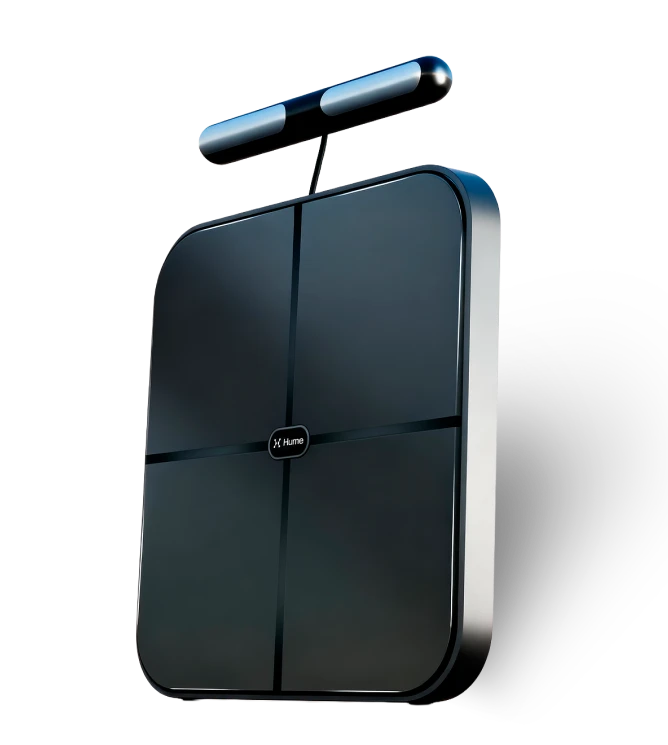
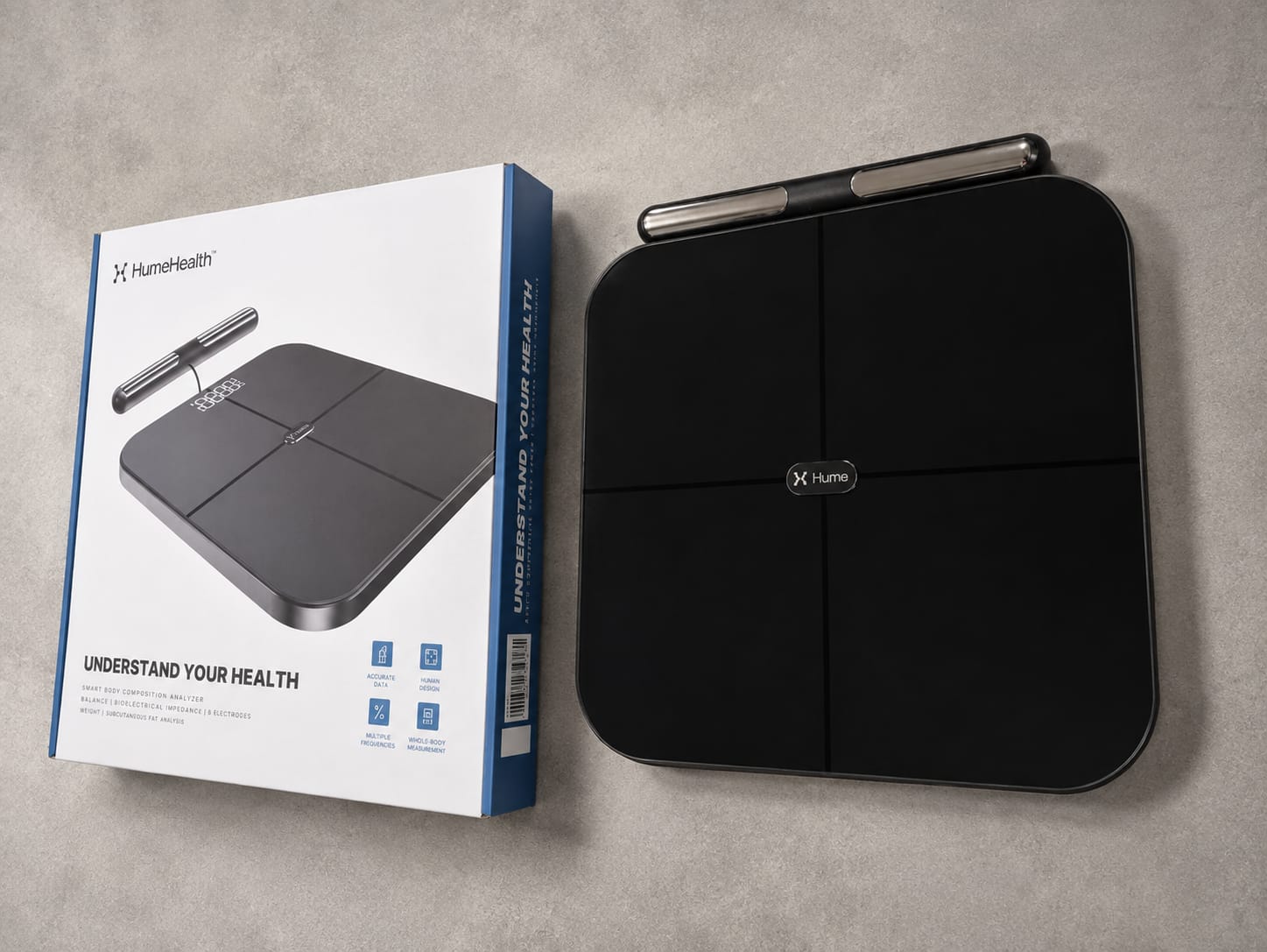
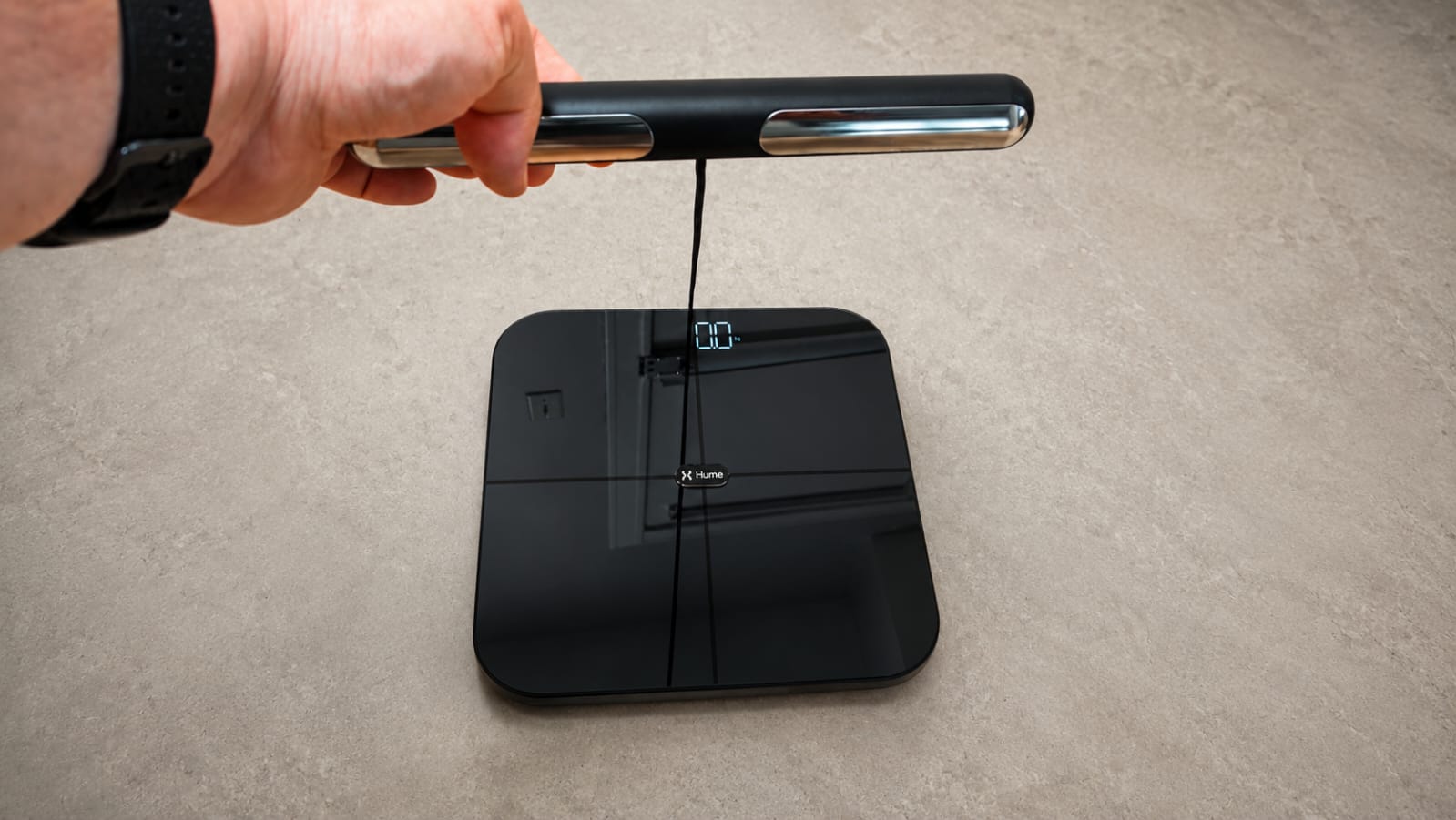
A look at what actually arrives in the box, and the handheld sensor you hold during a scan.
I may earn a commission if you buy through this link. My opinion stays my own.
The Hume Pod is a smart body scale. But calling it just a "scale" undersells it a little.
Think of a regular scale like a mirror that only shows you one angle. The Pod is more like a full walk-around view of your body's health, tracking 45 different things, not just pounds.
Say you're 50, hitting the gym three times a week, and the number on your old scale hasn't budged in a month. Frustrating, right? The Pod would likely show you're losing fat and gaining muscle at the same time, since your old scale just can't tell those two apart. That's who this is really built for, anyone tired of a number that doesn't tell the whole story.
I may earn a commission if you buy through this link. My opinion stays my own.
When you step on, the Pod sends a tiny, completely safe electrical signal through your body. You won't feel a thing, it's gentler than the static shock from a wool sweater.
It's a bit like sonar on a submarine. The signal moves faster through muscle and slower through fat, and the Pod reads that timing difference to map out what you're actually made of.
This isn't a new gimmick, either. That same safe-signal method, called BIA, has been used quietly in doctors' offices for over 20 years. Hume Health cites an independent study by Socotech claiming it lines up within 2-3% of DEXA, the gold-standard scan hospitals use, though I couldn't find that study published anywhere outside Hume's own site, and the company states the figure inconsistently in different spots on its own page. Worth weighing that against the convenience of a device that lives under your bathroom sink.
I may earn a commission if you buy through this link. My opinion stays my own.
Since there's nothing to swallow, let's talk about the parts that actually do the work.
Like checking soup with eight spoons instead of one, more signals, a truer read on fat, muscle and water.
Accurate to about the weight of a slice of bread, so small week-to-week changes actually show up.
Right in the metal plate, so a quick heart health check happens the moment you step on.
Turns all those numbers into one simple daily score, instead of a spreadsheet you'll never open.
I may earn a commission if you buy through this link. My opinion stays my own.
That deflating moment when the scale says you "failed" even though you trained all week, this fixes it. You'll see the muscle you built, not just a stuck number.
Visceral fat wraps around your organs. You can't pinch it in the mirror, but it's what doctors actually worry about, and the Pod puts a number on it.
Up to 24 people can use one Pod. You, your partner, even the kids, everyone gets their own private trends instead of one confusing shared number.
Apple Health, Fitbit, Garmin, it syncs automatically, so your data lands where you're already tracking your steps and sleep.
I may earn a commission if you buy through this link. My opinion stays my own.
Most reviews test a device for a week or two. I found one that's different: someone who used the Hume Pod for six months and compared it against three separate DEXA scans over that time, not just once.
The pattern they found is specific, and useful if you end up buying one. Readings stayed reasonably close to DEXA when taken under consistent conditions, similar time of day, similar hydration. But there was a bias: the Pod tended to slightly overestimate lean mass and slightly underestimate fat percentage compared to DEXA.
The practical takeaway: if you get one, weigh in around the same time each day, in a similar hydration state, and pay more attention to the trend line than any single reading.
I may earn a commission if you buy through this link. My opinion stays my own.
"As someone who has struggled with maintaining a healthy weight for years, being able to see my progress beyond my weight has been super motivating."
"It's changed how I measure success. It's helped me focus on my health instead of just the number on the scale."
"I compared it to expensive hospital scans and this one was surprisingly accurate for a home device."
"Seeing the body composition data, not just weight, kept me motivated in a way the scale alone never did."
Testimonials published by the manufacturer on their official site. I haven't independently verified them. Individual results vary.
I may earn a commission if you buy through this link. My opinion stays my own.
Look, I get it. Nobody wants to drop money on a gadget that just sits in a drawer. Here's the deal: you get 45 days to try the Pod at home.
Hate it? Send it back for a full refund, no drama. Every Pod also ships with a 1-year warranty against defects, and there's an optional 10-year plan for anyone who wants long-term peace of mind. Worst case, you're out nothing.
Visit the Official Site →I may earn a commission if you buy through this link. My opinion stays my own.
Reading about it only gets you so far. The official page has the current price, bundle options and the full 45-day trial details.
Visit the Official Site →I may earn a commission if you buy through this link. My opinion stays my own.
I may earn a commission if you buy through this link. My opinion stays my own.
After digging through the tech, the manufacturer's own inconsistent accuracy claims, independent clinical evaluation, and a genuine six-month user test against real DEXA scans, my answer is a qualified yes.
It does fix the one thing every regular scale gets wrong: it tells you what's actually changing, fat, muscle, water, not just a single stubborn number. But I'd go in with eyes open. Independent evaluation found more inconsistency for women and people with lower body fat specifically, and the readings tend to run slightly optimistic on lean mass. Use it for trends over time, in consistent conditions, not as a lab-grade single reading.
Between the free core app, the multi-user support, and the 45-day trial, trying it is still fairly low-risk. If you want something simpler and cheaper, it's worth knowing PCMag's own pick for most buyers is the $79.99 Etekcity HR. But if you want the deeper metrics and don't mind the Bluetooth-only sync, the Hume Pod is worth a closer look.
You'll be redirected to Hume Health's official site, where you can review the full offer before checking out.
I may earn a commission if you buy through this link. My opinion stays my own.